
Editorial correction — September 20, 2026. We remove an imagined scene presented as fact and unsupported assertions about audit monitoring, spending allocations, and recovery. The plea, losses and sentencing date are attributed to the dated prosecution announcement.
What was admitted
The Justice Department’s September 9, 2026 announcement says Alexander Ortiz-Robles pleaded guilty the previous day to a bribery conspiracy involving approximately $6.77 million in lost Puerto Rico tax revenue. He worked for Hacienda from June 2020 through October 2025 and had privileged access to tax systems.
According to the plea account, he accepted four payments totaling $101,500 in return for improperly eliminating taxes owed by individuals and businesses. The release places this plea alongside other schemes with combined tax-revenue losses exceeding $14 million. Those totals should not be assigned entirely to his individual case.
The announcement scheduled his sentencing for January 15, 2027. This is a dated schedule, not a report of a sentence already imposed. The release does not establish how much money will ultimately be recovered or prove that nobody monitored the relevant audit records.
Equal rules are the public asset
The moral issue is larger than access to a computer. A tax official exercises authority over obligations that other people cannot simply negotiate away. Selling that authority turns a shared rule into a private advantage.
My judgment is that this damages the relationship between citizens and government even when a particular citizen never meets the corrupt official. People are asked to comply because the obligation is public. If privileged access can purchase exceptions, compliance begins to look like a burden reserved for people without the right connection.
What meaningful repair would show
A conviction addresses an individual’s conduct. An institutional response should also explain how unusual adjustments are reviewed, how employees’ access is limited, and who can investigate an override independently of the person who made it. These are questions for oversight, not findings that each safeguard was absent here.
Residents should also ask for a clear financial accounting: which obligations were altered, which assessments were restored, what restitution was ordered, and what was collected. An order to return money and an actual repayment are different events. Neither a guilty plea nor a forceful press release settles the recovery question by itself.
The personal question is direct: when entrusted with a power other people lack, do we treat it as a duty or an opportunity? The public response should be equally direct. Preserve the evidence, enforce fair rules, disclose the repair, and check whether the exception can be sold again.
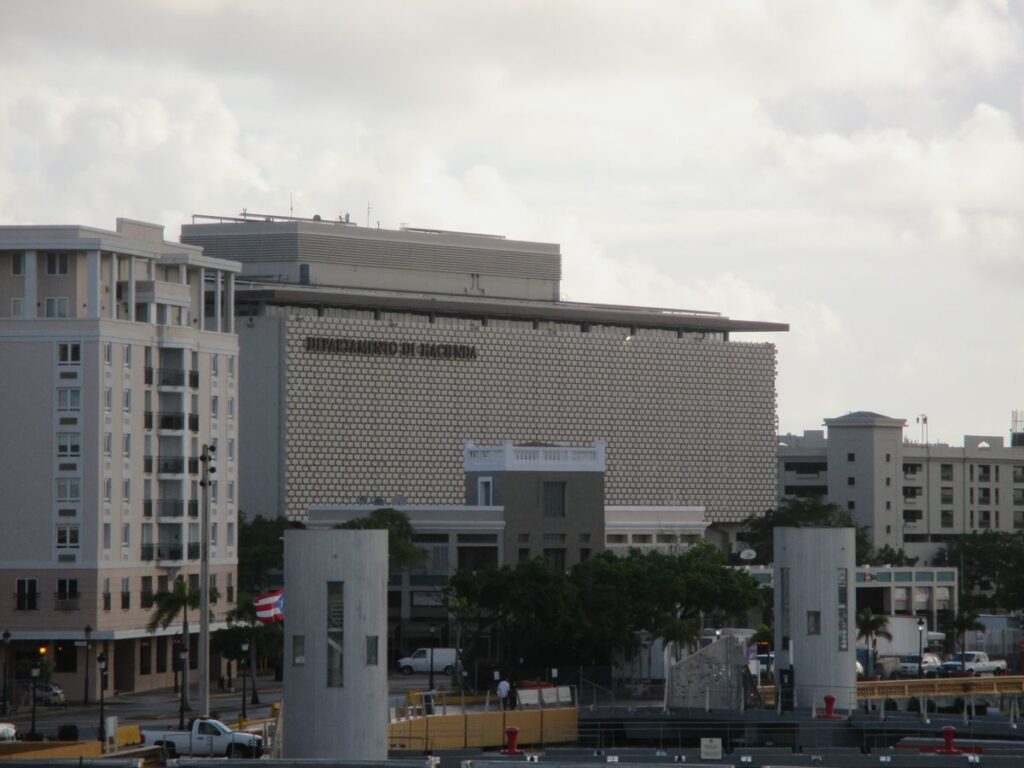
Featured photo: Puerto Rico Department of Treasury building, San Juan. Mattes, CC BY 2.0, via Wikimedia Commons.