
Editorial correction — September 20, 2026. The $245 million figure is intended loss, not money recovered. The enforcement announcement combines separate cases and legal stages; it does not establish guilt for every charged defendant. Unsupported investigative timelines and identity details have been removed.
What the announcement counts
In its September 14, 2026 enforcement announcement, the Justice Department reported actions involving more than 160 defendants and approximately $245 million in intended losses connected with COVID-era small-business lending. The reporting period ran from June 12 through September 1.
The total combines nearly 80 newly charged defendants, approximately 43 guilty pleas, and approximately 40 sentencings. It covers separate cases involving Paycheck Protection Program and Economic Injury Disaster Loan funding. It is not a finding that everyone participated in one conspiracy.
Intended loss measures the loss attributed to the attempted conduct. It is not interchangeable with funds actually disbursed, a restitution order, or cash returned to taxpayers. Newly charged defendants remain presumed innocent; pleas and sentences represent different stages of adjudication. The announcement does not supply one investigation start date for all the cases.
Why the distinction matters
Public money carries a promise to people who followed the rules. Fraud against emergency assistance can violate that promise precisely when honest applicants have little room to absorb delay or denial. That is the moral concern behind this case file.
But an account demanding honesty from borrowers should demand it from its own arithmetic. Calling an intended-loss total recovered money gives readers a false picture of what enforcement accomplished. Treating everyone charged as convicted repeats the same mistake with people’s legal status.
A useful accountability ledger
For any individual case, first record the program, application amount, payment amount, and legal stage. Then look for the court’s findings, restitution order, forfeiture order, and evidence of collection. Leave an unknown entry blank rather than filling it with a plausible story.
There are also two distinct policy questions. How should emergency assistance reach eligible businesses quickly? What checks should identify false applications without blocking legitimate ones? A list of prosecutions cannot answer either question alone. It can identify conduct that a more detailed program review should examine.
My judgment is that accountability requires both prevention and repair. A sentence matters. So does whether victims receive money, whether an application weakness is corrected, and whether honest businesses can obtain help during the next emergency. Announcing a large number is the beginning of that examination, not its conclusion.
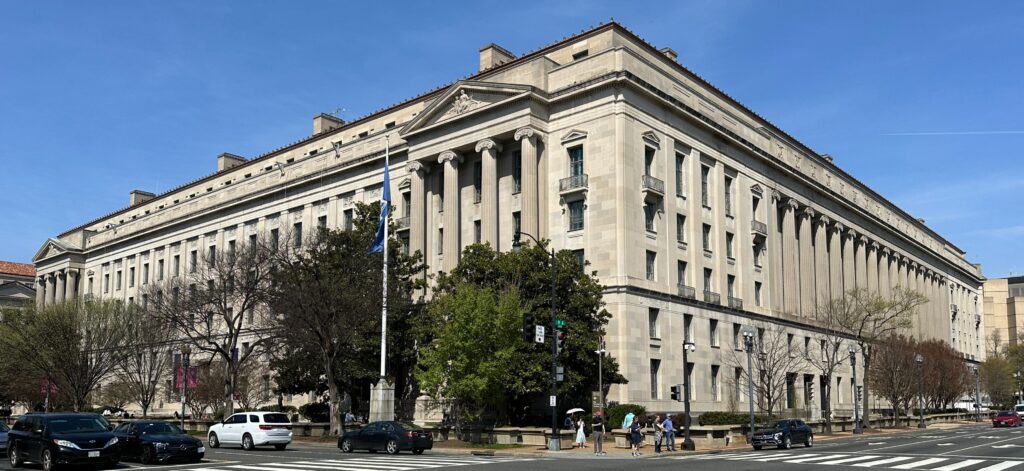
Featured photo: Robert F. Kennedy Department of Justice Building, Washington, D.C. APK, CC BY 4.0, via Wikimedia Commons.