
Anna Barbara Hantz Marconi sat on New Hampshire’s highest court. She was nominated by then-Gov. Chris Sununu and joined the court on August 8, 2017, according to the New Hampshire Bar Association. For nearly two years, she was also the subject of a criminal case and then a judicial ethics case tied to her own husband’s legal trouble.
That saga ended on September 15, 2026, when she resigned under a negotiated settlement instead of facing a public misconduct hearing in December.
A Private Meeting With the Governor
In October 2024, a Merrimack County grand jury indicted Hantz Marconi on two felonies and five misdemeanors, according to the New Hampshire Department of Justice’s case page. The charges included attempted improper influence.
The case centered on a private, off-the-record meeting she held with then-Gov. Sununu. At the time, her husband, Geno Marconi, the state’s Ports and Harbors director, was under criminal investigation. Prosecutors said she used the meeting to seek relief for him.
A Reduced Plea and a Return to the Bench
In October 2025, Hantz Marconi pleaded no contest to a single reduced misdemeanor count of Criminal Solicitation of Misuse of Position, according to the DOJ announcement. She paid a $1,200 fine. Prosecutors dropped the felony charges. She returned to the Supreme Court bench.
Her husband faced his own case. He pleaded to related charges and received a suspended 30-day sentence and a $2,000 fine, according to the DOJ announcement. He was also required to resign from his state ports post.
Retirement Didn’t End the Ethics Case
Hantz Marconi reached New Hampshire’s mandatory judicial retirement age and stepped down from the court in February 2026. But retiring did not close the book. The state’s Judicial Conduct Committee publicly confirmed its ethics investigation was still active, according to the JCC’s own news page.
The New Hampshire Bar Association’s account of her career fills in the timeline between the plea and the retirement. After her October 2025 no-contest plea, the Supreme Court rescinded its orders placing her on administrative leave on October 7, 2025, and a specially convened panel reinstated her to the practice of law on October 9, 2025. She retired the day before her 70th birthday, in line with New Hampshire’s mandatory retirement age for judges. New Hampshire Bar Association.
That sequence is worth noticing. A justice who admitted a misdemeanor tied to using her office for her husband’s benefit was cleared to return to the bench in October 2025, the same month as her plea, and left only when the retirement age required it. The formal ethics case outlived her time on the court. Whatever one thinks of the final settlement, the system that is supposed to police judges moved far more slowly than the one that prosecuted her.
The JCC docket dates its statement of formal charges and hearing notice August 3, 2026. News outlets reported the charges on August 6. The official docket and the news-publication date therefore refer to different events. A public hearing was scheduled for December 7 through 9, 2026, according to InDepthNH’s reporting.
The Deal That Closed the Case
That hearing never happened. On September 15, 2026, the JCC docket shows the parties filed a Stipulation and Agreement, along with a Letter of Resignation and the Supreme Court’s Final Order, according to the JCC’s news page. The negotiated settlement closed the misconduct case before it could go to a public hearing.
Our Take
This next part is editorial interpretation, not a sourced fact. A sitting justice on a state’s highest court is supposed to be one of the last people willing to trade on her position for a private benefit. Instead, the record shows a justice who sat down privately with a governor to try to help her husband dodge a criminal probe, then spent nearly two years managing the legal and ethical fallout. She never faced a public misconduct hearing. She left through a settlement instead.
That outcome may satisfy the legal requirements. Whether it satisfies the public’s sense of accountability is a separate question.
What do you think this case says about accountability for the people who are supposed to enforce it? Share your verdict at themoraldecayindex.com.
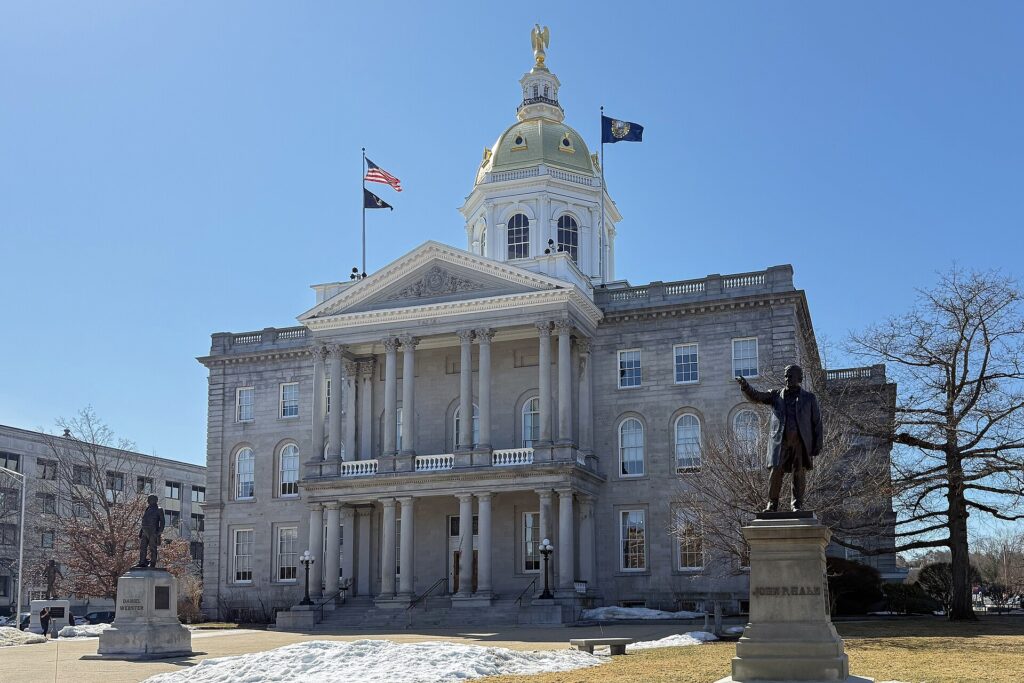
Photo: New Hampshire State House in Concord, by Quintin Soloviev, CC BY 4.0, via Wikimedia Commons.