
Editorial correction — September 20, 2026. Corrected daily-use and nicotine-pouch statistics and removed unsupported claims that declining prevalence proves worsening dependency.
A decline in youth tobacco use deserves to be reported as progress. It does not require a declaration that the problem is finished. The harder task is to recognize improvement while examining the young people who still use nicotine.
What the 2025 survey says
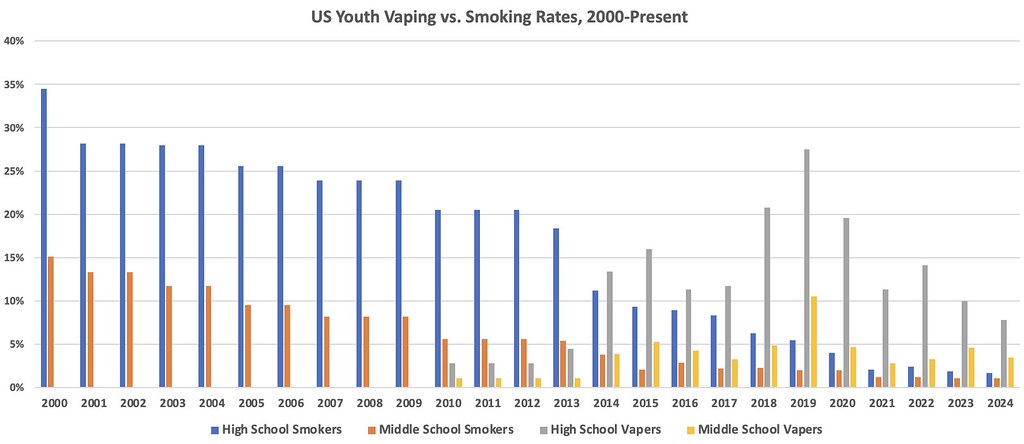
The FDA reports that 7.1% of high school students, approximately 1.13 million, reported current e-cigarette use in the 2025 National Youth Tobacco Survey. Among current youth e-cigarette users across the surveyed school levels, 27.5% reported daily use. Nicotine-pouch use was 1.7% across all surveyed students. These groups and denominators must not be mixed. Read the FDA results and methodology links.
Current use means use during the past 30 days. It does not mean that every current user uses daily. Nor does daily-use prevalence alone establish why a young person started or whether one particular regulatory action caused a change.
Our analysis: count progress honestly
A publication loses credibility when every improvement is reinterpreted as hidden deterioration. Prevention should be judged using the measures relevant to its purpose: initiation, frequency, access, and support for stopping. A single headline cannot answer all four questions.
The industry also deserves scrutiny without invented numbers. Product design, promotion, and youth access are legitimate subjects for investigation. The standard should be evidence of the particular practice being criticized, not an assumption that a frightening national story proves every allegation.
What useful local accountability looks like
Ask a school what help is available when a student wants to stop using nicotine. Ask whether disciplinary rules make it easier to seek help or merely easier to conceal use. Ask regulators what evidence supports their priorities and how they will measure results.
The moral demand is consistency: welcome a reduction in use, take remaining use seriously, and avoid turning struggling teenagers into props in an argument about national decline.