
💰 Current Events ← Back to All Articles
An Idaho couple bought luxury cars with money they allegedly stole from the IRS by mailing in paperwork that didn’t exist. Fictitious trusts. Fictitious financial instruments. Real refund checks. Before anyone caught it, the scheme had already pulled in more than $8 million of the $57 million it was chasing.
The Scheme
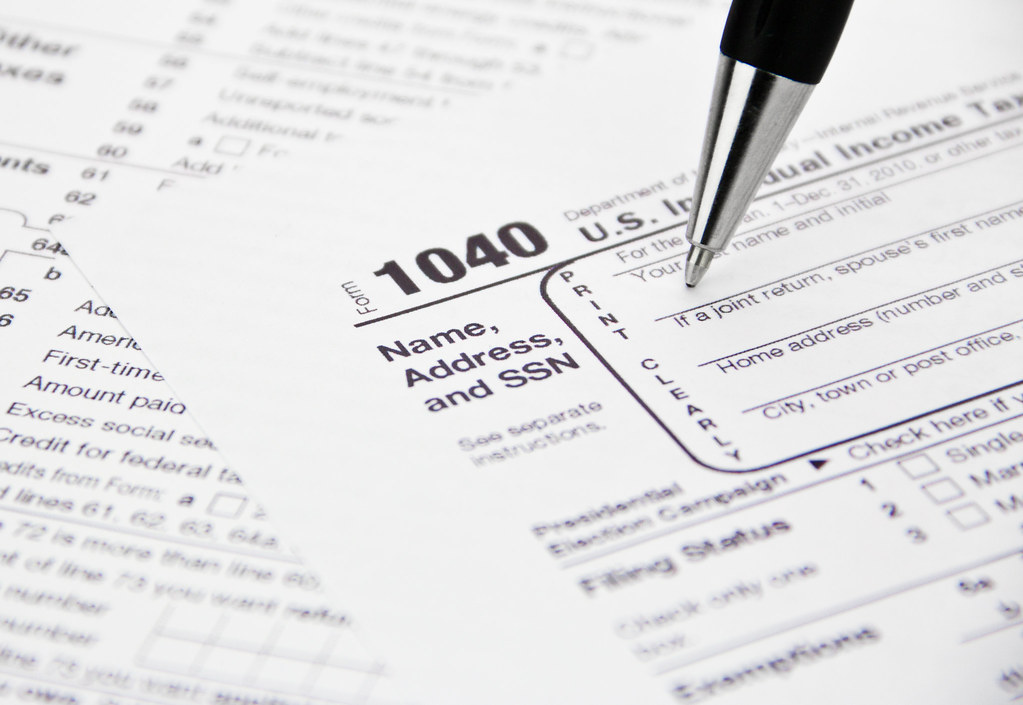
On September 3, 2026, the Department of Justice unsealed a superseding indictment charging seven people — Andrea and Kent Shannon of Kuna, Idaho, along with five co-defendants in Illinois, Florida, California, and Georgia — with conspiracy to commit wire fraud, making false claims, and money laundering. According to the Department of Justice, the group prepared and submitted false individual and trust tax returns along with fictitious financial instruments to the IRS from 2023 through 2024, filing over 100 fake documents in an attempt to claim more than $57 million in refunds. They allegedly succeeded in collecting over $8 million before investigators moved in.
The Shannons face additional charges for using the fraudulently obtained refunds to buy personal property, including luxury cars. If convicted, all seven face up to 20 years in prison on the conspiracy count alone.
Not an Isolated Case
This indictment landed the same week as two other federal tax fraud announcements — a Michigan man pleading guilty to a $7 million scheme and a Minnesota man pleading guilty to filing a false IRS claim. The Justice Department stood up a dedicated National Fraud Enforcement Division in April 2026 specifically because cases like this kept stacking up faster than existing units could work them.
The scale underneath these individual prosecutions is what makes them more than local crime blotter items. The Government Accountability Office estimates federal agencies made $186 billion in improper payments in fiscal year 2025 alone — an increase of $24 billion over the year before. Separately, the IRS has estimated the broader federal tax gap, the difference between what’s legally owed and what actually gets paid, at roughly $600 billion a year. GAO puts total annual fraud losses across the federal government as high as $521 billion.
The Detection Gap
What stands out in the Shannon case isn’t the fraud itself — fabricated trust documents are a well-known scheme type the IRS has warned about for years — it’s the lag. Two years of filings, over 100 fictitious instruments, and $8 million paid out before enforcement caught up. Fraud built on paperwork that merely looks legitimate can move faster than the systems built to check it, and every dollar that clears before detection is a dollar an honest system quietly told itself didn’t need a second look.
A hundred fake documents got through before one real investigator did.
What This Means for the Index
None of this requires a partisan lens to register as decay. A functioning system doesn’t need every fraud attempt to fail — it needs to catch them before real money moves. When $8 million in fabricated refunds clears the door, and it takes a dedicated federal division to even keep pace with the volume of schemes like this one, the erosion isn’t just financial. It’s the quiet expectation, shared by everyone from tax preparers to ordinary filers, that institutions built to verify are functionally outrun by the people trying to beat them. That gap between what a system is supposed to catch and what it actually catches is exactly the kind of decay this Index exists to track.
Tuesday September 8th 2026
— David, The Moral Decay Index