🔥 Current Events ← Back to All Articles
Today in Dallas, Republicans close out the first midterm convention in party history with a Thursday-afternoon programming block literally titled “Anti-Corruption & The Swamp.” It’s a strong message. It would land a lot better if the people funding the two-day event weren’t sitting on $45 million they won’t explain.
The Convention, By the Numbers
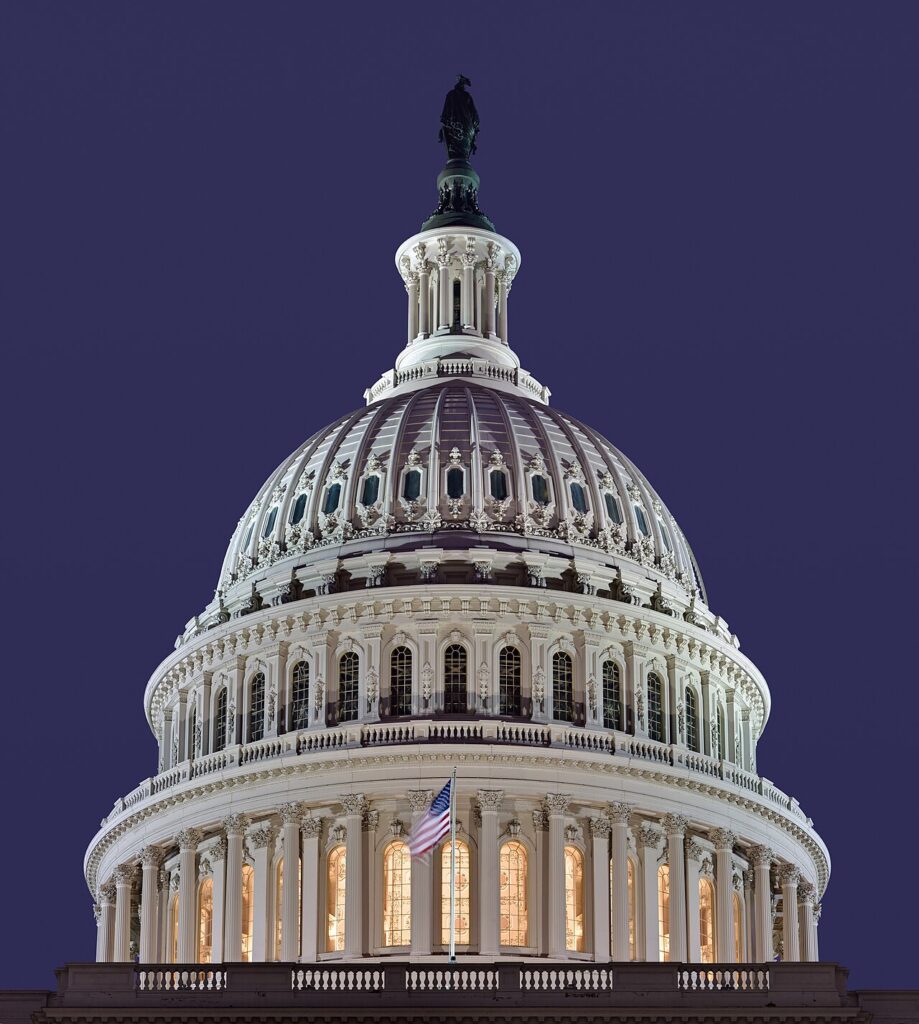
The Republican National Committee is holding its first-ever midterm convention September 9-10, 2026, at the American Airlines Center in Dallas — informally dubbed “Trumpapalooza.” Vice President JD Vance delivered the opening keynote Wednesday night; President Trump closes the event Thursday. The RNC’s own programming sheet lists 109 total speakers and segments across both nights. (Texas Tribune)
Getting in the room isn’t free. The National Republican Congressional Committee has asked House GOP members for a minimum of $25,000 to attend with a guest, with packages reportedly running as high as $100,000 — a price tag steep enough that some members are simply skipping the event. Meanwhile, Donald Trump’s own super PAC is sitting on more than $400 million and has said it plans to spend up to $500 million this midterm cycle. (Texas Tribune)
The Anti-Corruption Hour
Give the RNC credit for the headline: Thursday’s 4-5 p.m. ET programming block is officially titled “Anti-Corruption & The Swamp,” described in the party’s own release as “targeting systemic corruption and Capitol Hill trading bans, with the local cost of mismanaged funds and fraud scandals.” Wednesday night’s lineup included a segment called “Government Integrity,” built around a proposed ban on members of Congress trading individual stocks. (RNC)
Who’s Actually Paying For It
The convention itself is bankrolled separately from the RNC, through a private nonprofit called the Dallas 2026 Host Committee. That group says it raised $45 million in less than four weeks — and hasn’t named a single donor. Corporate sponsorship dollars are reportedly flowing through the same non-disclosing structure, and the federally mandated filings that would eventually reveal who gave aren’t due for months.
Joedy McCreary, a senior reporter at the nonpartisan money-in-politics tracker OpenSecrets, tried to trace the funding and came up short: “We ran into maybe some roadblocks just because we couldn’t track down any specific dollar figures. They collected that money from local, state, national, all sorts of individuals and companies, but they haven’t identified them.” (Marketplace)
Texas Democratic Senate candidate James Talarico, running against Republican Ken Paxton this fall, called the event a “Billionaire Ball” in a statement last week: “Billionaire mega-donors and their puppet politicians will gather at a convention in Dallas to clink champagne glasses and toast their own corruption.” That’s a campaign attack line, not a finding of wrongdoing — nothing about the Host Committee’s fundraising has been alleged to be illegal. (Texas Tribune)
Not Just One Party’s Problem
None of this makes the GOP uniquely corrupt — the legal architecture behind it is standard practice on both sides. The four major House- and Senate-focused super PACs aligned with the two parties raised a combined $197.7 million from affiliated dark-money groups between January 2025 and June 2026, and roughly $1 billion in anonymous money is moving through the 2026 midterms overall. (Issue One)
Erika Franklin Fowler, co-director of the nonpartisan Wesleyan Media Project, says the trend goes beyond any one event: newer dark-money groups increasingly hide behind names with no party label attached — “‘mom and apple pie’-sounding groups, so things like ‘Americans for an American America'” — precisely so voters can’t tell who’s funding what. (Marketplace)
“Dark money is a big factor in U.S. election spending, in particular, because we can’t trace where all the money goes back to.” — Erika Franklin Fowler, Wesleyan Media Project
What This Means for the Index
This isn’t a story about one party breaking the rules — it’s a story about what the rules currently allow. A convention can build an entire primetime hour around “rooting out corruption” and “government integrity” while the convention itself runs on tens of millions of anonymous dollars that legally won’t have to be disclosed until long after voters have gone to the polls. Nobody has to lie for that gap to exist; the law simply doesn’t require anyone to tell the truth about it yet. That’s exactly the kind of erosion the Index exists to track — not a single scandal, but a system where “the swamp” and “the fundraising strategy” quietly turned out to be the same building.
Thursday September 10th 2026
— David, The Moral Decay Index