
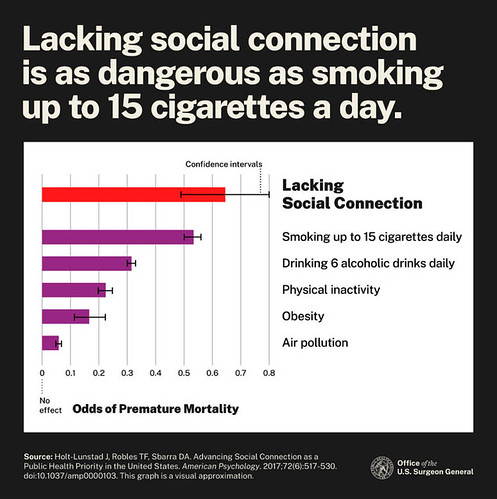
Editorial correction — September 20, 2026. Removed unsupported historical superlatives, confused mortality comparisons, and claims that equated loneliness with moral deficiency; linked the original advisory.
Loneliness deserves a response that preserves the dignity of the person experiencing it. It is not evidence that someone has failed morally, and it should not be used as a label for an entire generation.
What the advisory addresses
The U.S. Surgeon General’s 2023 advisory examines loneliness, social isolation, and the health significance of social connection. Loneliness concerns a person’s felt lack of desired connection; isolation concerns the extent of social contact and relationships. They are related but not identical. Read the advisory and supporting resources.
The earlier article combined risk estimates and smoking comparisons without preserving their definitions. It also asserted historical records and moral consequences that were not adequately established. Those claims have been removed. Population research is not a diagnosis or prediction for an individual.
Belonging is more than a head count
A person can attend an event without feeling able to speak honestly there. An organization concerned about belonging should therefore ask more than how many people entered the room. Was a newcomer welcomed? Were there understandable ways to participate? Could someone express a need without becoming an object of pity?
These are practical questions for a congregation, neighborhood group, or employer. They do not require assuming that all people want the same kind or amount of social contact.
An invitation should respect agency
Our moral argument is that communities should make room for people without judging their worth by sociability. A quiet person is not necessarily lonely, and someone who is lonely should not have to perform gratitude for every invitation.
Regular, accessible opportunities to take part can be a starting point for a community’s own work. The organization should listen to the people it hopes to include and examine barriers such as timing, cost, transport, or accessibility in that particular setting.
Social support can complement professional care when it is needed. It should not be presented as a universal cure or as a reason to dismiss an individual’s experience. The responsibility is to offer connection with respect, rather than turn distress into an accusation.