
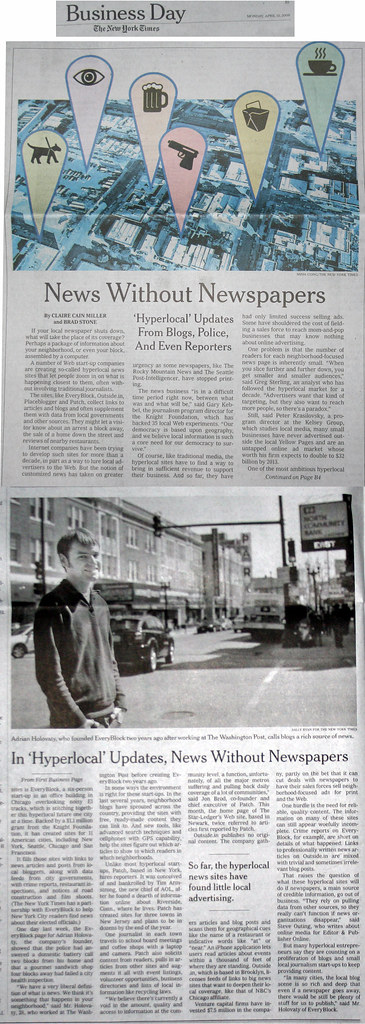
America has lost more than a third of its newspapers since 2005 — roughly 3,300 of them — and last year alone, another 136 stopped the presses for good, a rate of better than two a week. County by county, city hall is going uncovered, and nobody is filling the seat in the back row of the school board meeting.
The Ledger of Loss
Northwestern University’s Medill Local News Initiative has tracked this collapse for years, and its 2025 State of Local News report found the trend still accelerating. The number of “news desert” counties — places with no local news source whatsoever — rose to 213, up from 208 the year before and 204 the year before that. Roughly 50 million Americans now live with limited or no access to a local news outlet of any kind.
It isn’t just full deserts. Medill’s 2024 report counted 1,563 counties left with only a single surviving news source — usually a shrunken weekly or a regional outlet with no reporter within an hour’s drive. Between the outright deserts and the single-source counties, the report put nearly 55 million Americans in some version of a local-news gap.
“Nobody voted to defund the school board beat. The reporter just wasn’t there to cover the vote — and neither was anyone else.”
Ghost Papers
Researchers have a name for what survives in the space between a functioning newsroom and a full closure: “ghost newspapers,” publications that still print or post but are mere shells of what they once were — a skeleton staff running wire copy and press releases where a reporter used to sit through a three-hour zoning hearing. Most of the closures in Medill’s most recent count came not from big chains but from small, independently owned papers — family-run outlets finally surrendering to costs they can no longer cover.
There is a genuine bright spot in the data: more than 300 local news startups have launched over the past five years, roughly 80% of them digital-only. They tend to cluster in cities, not the rural counties losing their last paper. The startups are real, but they haven’t come close to replacing what’s gone.
The Accountability Gap
The consequences aren’t abstract. Research on newspaper closures has found that voter turnout in local elections drops by an estimated 4.35% for every local newspaper lost — fewer people show up because fewer people know who’s on the ballot or what the county commission just did. Other studies link newspaper closures to higher municipal borrowing costs and less efficient local government, on the theory that officials spend more carefully when someone might write about it.
The economics driving this aren’t mysterious. Advertising revenue that used to fund local reporting migrated to national tech platforms years ago and never came back. Print subscriptions keep declining. Hedge-fund and private-equity ownership of surviving chains has stripped newsrooms to skeleton crews to protect margins. None of it is a partisan story — red counties and blue counties are both losing their papers, often for the identical reason: the math stopped working.
📊 Index Impact — Local News Access
213
~3,300
Worsening
⚠ Warning
A community that can’t see itself in print — or on a local site, or anywhere — loses the one institution built to hold local power accountable to local people. The Index tracks this one closely, because it isn’t just a media story. It’s a self-governance story, and the data says the ledger is still running in the wrong direction.
Stay informed. Get the monthly index update delivered to your inbox.