
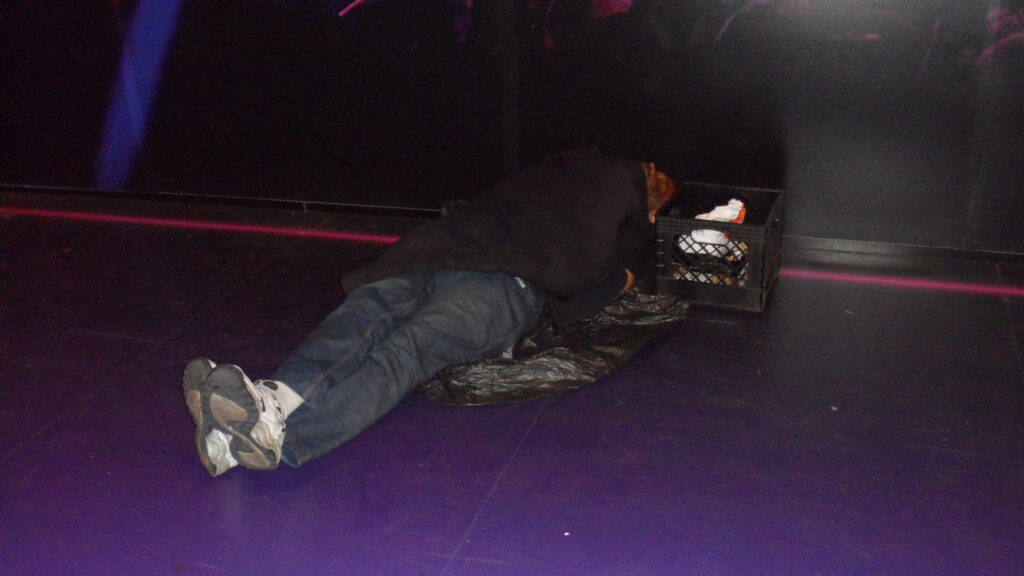
On any given night, more than 650,000 Americans sleep without shelter — in encampments, on sidewalks, under bridges, in doorways. The United States is the wealthiest nation in human history. Its homelessness crisis is not a resource problem. It is a policy failure compounded by a moral failure — a failure of both compassion and clarity.
The Scale of the Crisis
The Department of Housing and Urban Development counted 653,100 homeless Americans on a single night in January 2023 — the highest number ever recorded. This figure, already staggering, almost certainly undercounts the true total; point-in-time counts miss many people who cycle in and out of shelter or sleep in concealed locations. In major West Coast cities — Los Angeles, San Francisco, Portland, Seattle — the visible homeless population has grown so large that it has transformed the character of entire neighborhoods.
Homelessness has increased by 12% nationally since 2020. In California alone — home to roughly 30% of the nation’s homeless despite containing only 12% of its population — homelessness has increased dramatically despite the state spending more than $20 billion on the problem over the past five years. The combination of massive spending and worsening outcomes is itself a moral data point about the adequacy of current approaches.
What Drives Homelessness
Homelessness is not a simple problem, and its causes are not uniform. Research consistently identifies three primary drivers: severe housing unaffordability (particularly in coastal cities where zoning restrictions and regulatory barriers have made construction prohibitively expensive), untreated serious mental illness, and substance addiction. These three factors are intertwined — mental illness and addiction are both causes and consequences of housing instability, and their intersection creates a population that is extremely difficult to serve with standard housing assistance.
Roughly one-third of homeless individuals suffer from serious mental illness, and roughly half have active substance use disorders. Many have both. The deinstitutionalization movement of the 1960s and 1970s closed the psychiatric hospitals where these individuals would previously have received care — without building the robust community mental health system that was promised as a replacement. The result is that a substantial portion of America’s most severely mentally ill population cycles between the street, emergency rooms, and jails, with no stable therapeutic environment available.
“We declared that it was inhumane to house the severely mentally ill in institutions. Then we put them on the street. The question of which outcome is more humane has never received an honest answer from the people who made that decision.”
The Policy Failure
Cities that have spent the most on homelessness have generally seen the worst outcomes. Los Angeles has spent over $3 billion on homelessness programs since 2016 while its homeless population has grown by 70%. San Francisco spends roughly $70,000 per homeless person per year — more than the median household income of a San Francisco family — with homeless numbers that have barely budged despite a decade of declared emergencies.
The dominant policy framework in many cities — “Housing First,” which provides permanent supportive housing without requiring sobriety or treatment engagement — has a strong evidence base for certain subpopulations but has not proven scalable to the broader crisis. More critically, it addresses housing status without addressing the underlying conditions — addiction and mental illness — that made a person vulnerable to homelessness in the first place. A housed addict with untreated addiction will often lose their housing and return to the street.
The Moral Failure of Tolerance
In many progressive cities, a philosophy of non-enforcement has allowed homeless encampments to metastasize on public property — blocking sidewalks, parks, and transit stations, and creating conditions that are dangerous for both homeless individuals and the surrounding community. This approach has been justified in the language of compassion. It is, in practice, the opposite of compassionate.
Allowing severely mentally ill and addicted individuals to live without treatment or accountability in squalid encampments is not humane. It is the abandonment of those individuals by a society that has decided it is easier to tolerate their suffering in public than to make the difficult and expensive choices required to address it. True compassion demands treatment, accountability, and the expectation of recovery — not the indefinite management of visible misery.
📊 Index Impact — Homelessness Indicators
The homelessness crisis is a measure of a society’s willingness to confront hard realities honestly. It requires acknowledging that some people, through illness and addiction, have lost the capacity for independent self-governance and need structured intervention — not enabling. It requires building enough housing to make shelter accessible, while also requiring that those who use public space and public resources engage with treatment. It requires the political courage to say that visible human suffering on public streets is not acceptable — and that the appropriate response is not tolerance, but genuine help.
Stay informed. Get the monthly index update delivered to your inbox.
— David D.