
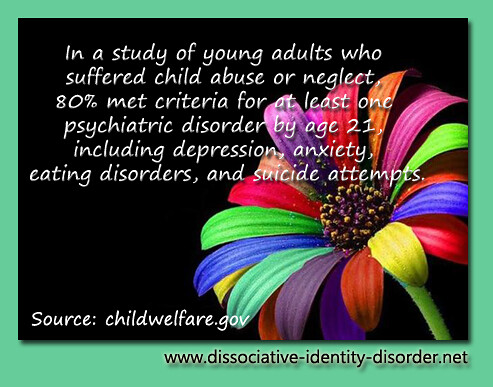
Approximately 2.6 million American teenagers had serious thoughts of suicide in the past year. 700,000 attempted it. Suicide is the second-leading cause of death for Americans aged 10 to 34. Among young adults aged 18–27, the suicide rate increased nearly 20% between 2014 and 2024. Gen Z is dying by suicide at higher rates than any previous generation did at the same age. These numbers represent a civilizational emergency that has been met with task forces, awareness campaigns — and precious little that has actually worked.
The Scope of the Youth Suicide Crisis
Federal health data released in 2025 confirms that while teen suicide rates showed a modest decline between 2021 and 2024 — with serious suicidal thoughts falling from nearly 13% to 10% — the underlying crisis remains catastrophic in scale. One in ten American teenagers still thought seriously about suicide in the past year. 700,000 attempted it. These are not statistics about a problem that is resolving — they are statistics about a problem that peaked at a historically unprecedented level and has retreated only slightly.
The picture for young adults is worse. The suicide rate for Americans aged 18–27 increased nearly 20% between 2014 and 2024, rising from 13.8 to 16.4 per 100,000 people. Research published in 2025 confirmed that Gen Z is dying by suicide at higher rates than Generation X did at the same age — a comparison that controls for the argument that suicide rates inevitably track with age. Something is genuinely different about the experience of being young in America today, and it is killing people.
Who Is at Greatest Risk
The youth suicide crisis does not fall evenly. Among LGBTQ+ young people, 39% seriously considered attempting suicide and 12% actually attempted it in the past year — a rate that dwarfs the general population and demands specific, sustained attention. Among Black high schoolers, the percentage who seriously considered suicide increased 50% between 2011 and 2021. Girls are more likely to attempt suicide; boys are four times more likely to complete it.
These disparities do not arise from nothing. They map onto specific patterns of social rejection, isolation, discrimination, inadequate mental health access, and the particular kinds of suffering that different groups of young people face. They also map onto the collapse of the protective factors — family stability, religious community, close friendship, sense of purpose — that the rest of this index tracks.
“When a generation loses its will to live, it is not suffering from a clinical disorder that can be solved by adding therapists. It is suffering from a loss of meaning — a loss of the sense that life is worth the pain it costs. That is a moral and spiritual crisis, not merely a medical one.”
What Is Driving It
The timing of the youth mental health crisis — accelerating from approximately 2012 onward — aligns closely with the mass adoption of smartphones and social media among adolescents. Researchers including Jonathan Haidt and Jean Twenge have documented the correlation extensively. Social media platforms expose young people to social comparison at unprecedented scale, displace the face-to-face friendships that build resilience and belonging, and create new vectors for bullying, exclusion, and self-objectification that have particularly severe effects on adolescent girls.
But screens alone cannot explain the full crisis. Young people are also navigating a world characterized by delayed adulthood, reduced family stability, diminished religious community, a college-to-debt pipeline that promises futures it cannot guarantee, and a broader cultural environment that has progressively failed to transmit a coherent sense of meaning, purpose, and human worth to the next generation. The suicidality is a symptom. The disease is a crisis of meaning.
📊 Index Impact — Youth Suicide Indicator
Stay informed. Get the monthly index update delivered to your inbox.
— David D.