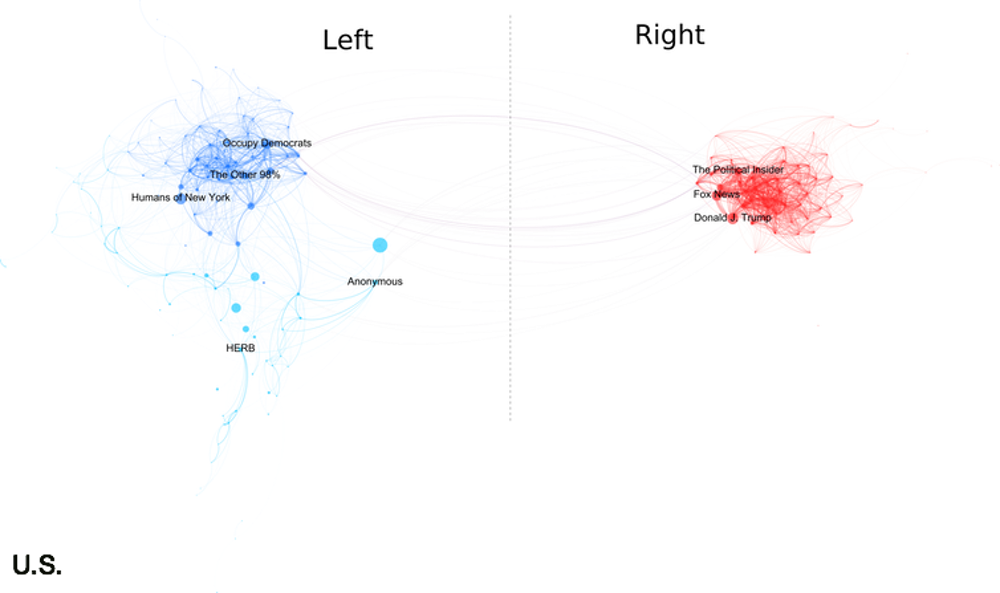
In 2022, 72% of Republicans and 63% of Democrats said the opposing party was more immoral than other Americans — dramatically up from 47% and 35% in 2016. The percentage of Americans who self-identify as political moderates hit a record low of 34% in 2025. Americans are not just disagreeing more — they are increasingly viewing their fellow citizens as moral enemies. That is not politics. That is the infrastructure of civil breakdown.
The Moralization of Political Difference
Political disagreement is as old as America. What has changed is not that Americans disagree about policy — they always have — but that disagreement has been progressively moralized. To disagree about tax rates or immigration policy was once to have a different view about how to achieve shared goals. Today, for a growing majority of Americans across the political spectrum, to disagree politically is to be morally suspect — to be a bad person, not merely a wrong one.
This moralization of politics has been documented across every major survey research institution. Pew Research Center’s data shows that the emotional distance between the parties — measured by how negatively each party’s members view the other — has grown dramatically over the past three decades and accelerated sharply since 2016. The share of adults who say there is at least some common ground between the parties has declined by an average of 12 points since 2023 alone.
The Collapse of the Center
Self-identified moderates, once the largest political group in America, have shrunk to a record-low 34% of the electorate in 2025. Among Republicans, 77% now identify as conservative and only 18% as moderate. Among Democrats, 55% identify as liberal, with just 34% calling themselves moderate. The political distribution has not merely shifted — it has hollowed out at the center and piled up at the extremes.
This is not just a problem for electoral politics. The disappearance of the moderate is a social phenomenon as much as a political one. Communities, workplaces, and families that once contained people of different views who managed to coexist and cooperate are increasingly sorting into ideological enclaves where exposure to genuine disagreement becomes rare and the caricature of the political opponent goes unchallenged by reality.
“When politics becomes identity — when your party affiliation defines not just your policy preferences but your moral worth — democratic competition becomes impossible. You cannot compromise with evil. You can only defeat it.”
The Violence Threshold Is Dropping
The most alarming leading indicator of where extreme polarization leads is not survey data about opinions — it is the growing acceptance of political violence. Pew Research Center’s 2025 data shows that Americans across party lines believe politically motivated violence is increasing — and that a significant minority express conditional acceptance of violence to achieve political goals. Political assassinations, attacks on offices, threats against elected officials, and mob actions have become regular features of American political life in ways they were not twenty years ago.
Historians of democratic breakdown note that the sequence is consistent across cases: extreme polarization produces dehumanization of political opponents, which normalizes rhetoric that was previously unacceptable, which lowers the threshold for political violence, which produces retaliatory cycles that further radicalize each side. The United States is not yet in democratic breakdown — but the indicators that precede it are accumulating at a pace that demands serious attention.
📊 Index Impact — Political Polarization Indicator
Stay informed. Get the monthly index update delivered to your inbox.
— David D.