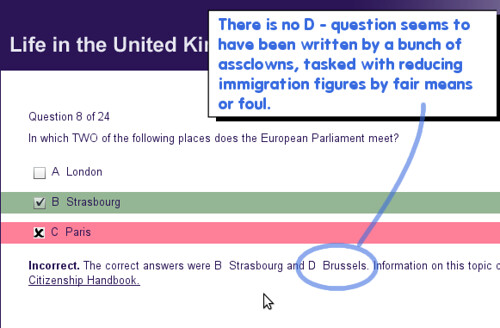
Two-thirds of Americans would fail the civics test required to become a naturalized citizen. That finding — confirmed by multiple surveys and the Annenberg Public Policy Center’s annual civics survey — is not merely an academic curiosity. It is an alarm. A nation whose citizens cannot name the three branches of government, cannot explain the Bill of Rights, and cannot identify the country from which America declared independence in 1776 is a nation that cannot govern itself effectively or defend its own foundations.
What Americans Don’t Know
The Annenberg Public Policy Center has administered a basic civics knowledge survey to representative samples of American adults for years. The results are consistently alarming. In recent surveys: only 47% of Americans could name all three branches of the federal government. More than one-third could not name any of the rights guaranteed by the First Amendment. Only 26% knew the number of amendments in the Bill of Rights. Fewer than one in four Americans could name all two senators from their state.
To become a naturalized U.S. citizen, immigrants must pass a civics test covering American history, government, and rights. The test requires knowledge of basic facts that surveys show a large majority of native-born Americans do not possess. The people who studied hardest to understand and value American democracy are immigrants who chose it. Many of those born into it have never bothered to learn what they inherited.
How This Happened
Civic education in American schools has been declining for decades. In an era of standardized testing focused on reading and mathematics, civics — once a required multi-year subject in most American high schools — has been compressed, marginalized, or eliminated. Many students graduate from high school having received less than a semester of formal civics instruction. College civics requirements have similarly declined. The result is generations of Americans who are literate and numerate by minimum standards but functionally illiterate about how their own government works.
Beyond schools, the civic culture that once reinforced political knowledge has eroded. Newspaper readership — which historically correlated strongly with civic knowledge — has collapsed. Local news, which covered the government institutions closest to citizens’ daily lives, has been devastated. The information environment that most Americans now inhabit is defined by entertainment, outrage, and social identity rather than substantive civic knowledge.
“Self-government requires self-knowledge. A citizenry that does not understand how its government is supposed to work cannot hold that government accountable. Civic ignorance is not a private failing — it is a public danger.”
The Consequences Are Not Abstract
Civic ignorance has real consequences. Citizens who do not understand the separation of powers cannot recognize when it is being violated. Citizens who do not understand what the First Amendment actually protects cannot defend it against either government overreach or private suppression. Citizens who do not understand the history of American democracy cannot recognize the warning signs when democratic norms erode. The relationship between civic knowledge and civic health is not theoretical — research consistently shows that citizens with higher civic knowledge are more likely to vote, more likely to contact elected officials, more likely to participate in community organizations, and more likely to hold nuanced rather than extreme political views.
📊 Index Impact — Civic Knowledge
What This Means for the Index
The Moral Decay Index tracks civic knowledge as a foundational indicator because self-governance is the project at the heart of the American experiment. That project requires citizens who understand what they are trying to govern — the structure of their institutions, the content of their rights, the history of their republic. A nation two-thirds of whose citizens cannot pass a basic civics test is a nation whose democratic foundations are weakening in ways that no election, no policy, and no leader can fix from the top down. The solution has to come from the bottom up, and it starts with taking civic education seriously again.
Stay informed. Get the monthly index update delivered to your inbox.
— David D.